The DeepSouth Hybrid VP Proposition:
CORE OBJECTIVE
We are raising capital, subsidies, and investment-in-kind to build hybrid Virtual Production studios in Cape Town and Johannesburg for dual educational-commercial use.
This capital investment is framed as a strategic, non-recoupable investment in emerging South African filmmakers and the country’s filmmaking capabilities as a whole. We are not asking educational institutions to fund this from operational or CAPEX budgets. We are pursuing external funding from government grants, private trusts, film commissions, and international development finance – and possibly private equity. We are however seeking institutional endorsement and in-kind support to underpin those applications.

CPUT
Cape Peninsular University of Technology
WITS
University of the Witwatersrand
UWC
University of the Western Cape
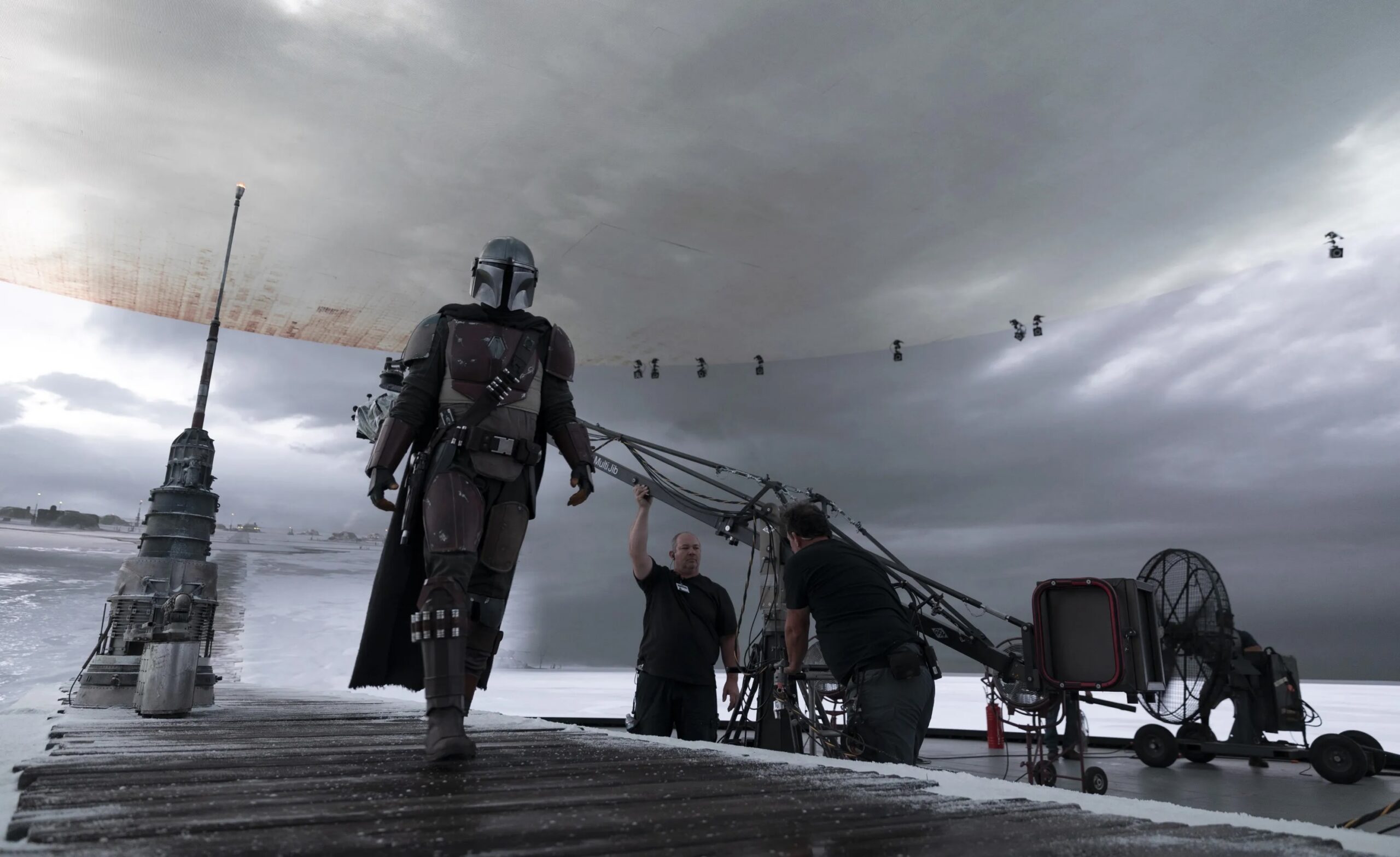
Virtual Production represents the most significant transformation in filmmaking methodology since the transition to digital cinematography. At its core, VP integrates real-time computer graphics with live-action filmmaking, enabling directors and cinematographers to see finished visual effects in camera during shooting rather than waiting months for post-production.
The DeepSouth Initiative proposes a multi-institutional partnership between the University of the Witwatersrand, the University of the Western Cape, and the Cape Peninsula University of Technology to establish South Africa’s first dedicated academic VP research and innovation hubs.
HYBRID = LED VOLUME + GREEN SCREEN + AI
We advocate for a Hybrid VP approach — combining LED volume technology with green screen capabilities, AI-integrated workflows, and modular architecture designed for continuous evolution. This positions us to serve today’s production needs while remaining adaptive as the technology landscape transforms.
Critically, we propose an Open Science approach. The knowledge generated through this initiative should be accessible to all. The machine isn’t the innovation — VP is a machine for innovation. And that innovation happens best when knowledge flows freely in a network of partners.
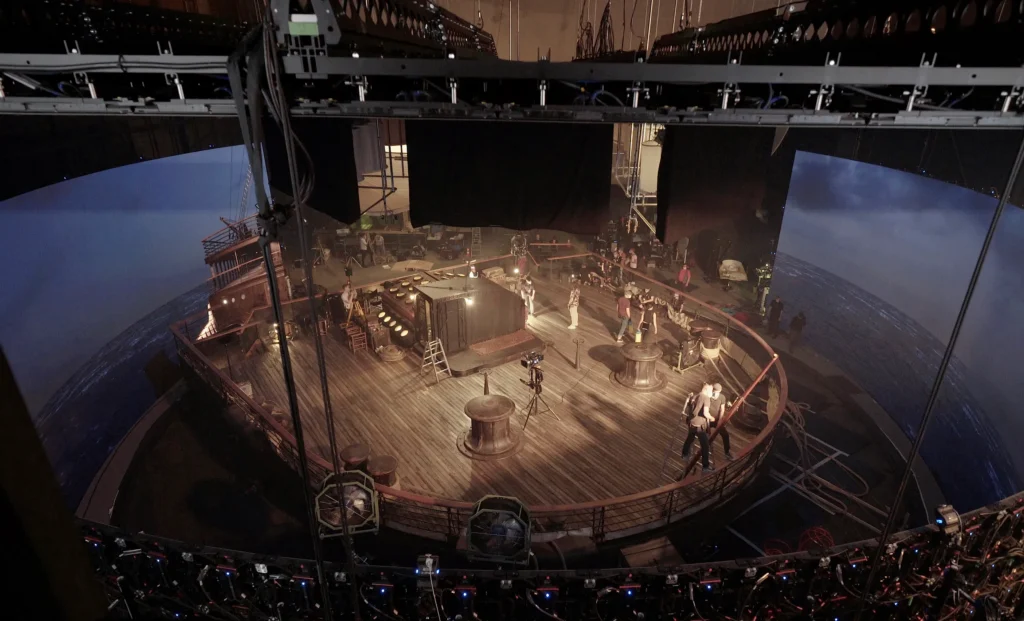
The educational and training opportunities that will arise from building this VP infrastructure span the full range of academic and professional development:
●
Undergraduate Integration
Basic VP skills embedded in existing production courses — giving all film and television students foundational exposure to the technology reshaping their industry. Cross-disciplinary access for architecture, engineering, computer science, and digital arts students.
●
Postgraduate Research
Creative practice-based research projects at Honours, Masters, and PhD level — exploring new methodologies for African storytelling in VP environments, AI-augmented workflows, and interdisciplinary innovation across faculties.
●
Industry Short Courses
Specialised micro-credential certifications in technical and niche areas of virtual production for working industry crew — from Unreal Engine world design and camera tracking to AI-VFX compositing and virtual art direction.
1 Investment > 2 Capabilities
South Africa needs to find ways to be more globally competitive on two critical fronts. VP capabilities boost both areas of competition simultaneously:
1. Creating compelling local content for international screens
South African stories deserve world-class production values. VP technology enables emerging filmmakers to build proof-of-concept worlds that would otherwise cost millions. A student with a compelling Afrofuturist vision doesn’t need Hollywood money — they need 48 hours in a VP lab. SA films generated only 1% of total box office revenue in 2021. VP gives local storytellers the tools to compete visually with global content while retaining authentic African narratives.
2 Attracting international productions to local studios
International productions increasingly expect VP capabilities as standard infrastructure at any serious film destination. South Africa received R2.52 billion in international production spend in 2023–2024, but is losing ground to territories with VP infrastructure. Productions now ask not only about landscapes and tax incentives but about LED volume access and technical support. Without VP capabilities, SA competes for a shrinking pool of productions that don’t require them.
Principal Investigators
Project Leadership
Dr Damon Heatlie
Senior Lecturer, WSOA Film & Television
Academic researcher, filmmaker, screenwriter, and university lecturer with expertise in film production, narrative design, and emerging creative technologies. Driving the strategic vision and funding strategy for the VP initiative since 2021.
Mr Jurgen Meekel
Lecturer, WSOA Film & Television
International experience in visual effects and post-production. Leading technical innovation research and VP workflow development. Deep industry knowledge of production pipelines and emerging VFX methodologies.
Strategic Context
Why this matters for South Africa
Industry Contraction
The SA film industry has contracted by ~50%. International productions expect VP as standard. Countries without VP infrastructure compete for a shrinking pool of traditional productions.
The Skills Mismatch
76% of SA film graduates report insufficient technical skills. By 2027, an estimated 50% of productions will use VP. Our graduates will either surf this wave or be overwhelmed by it.
Employment Crisis
Youth unemployment at 62% for 15–24 year olds. VP creates an ecosystem of specialised, high-value jobs — technicians command R45,000–R85,000/month internationally.
A Narrow Window
Nigeria is investing heavily in creative technology. Morocco is courting international productions. India targets 5% of the global AVGC market. If SA doesn’t move now, it plays catch-up for a decade.